Last updated November 23, 2026
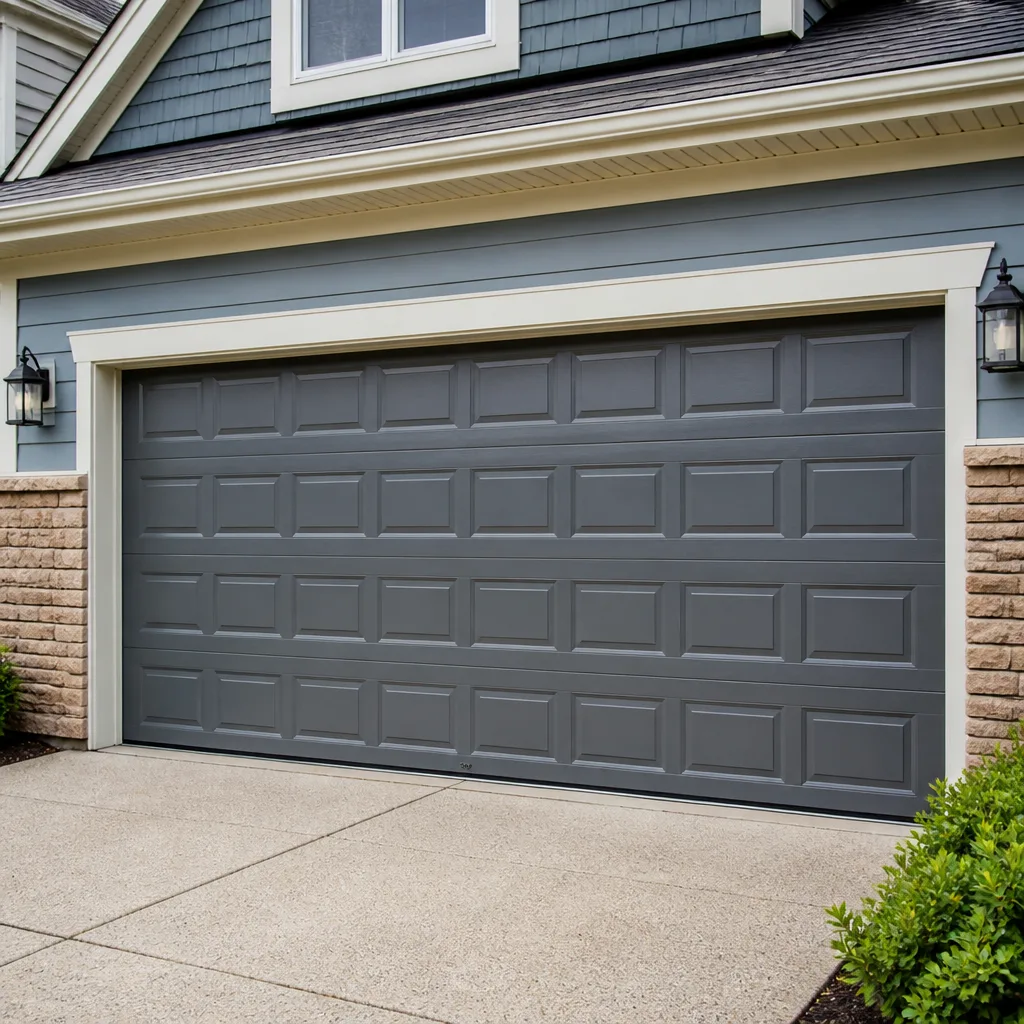 Raised-panel steel
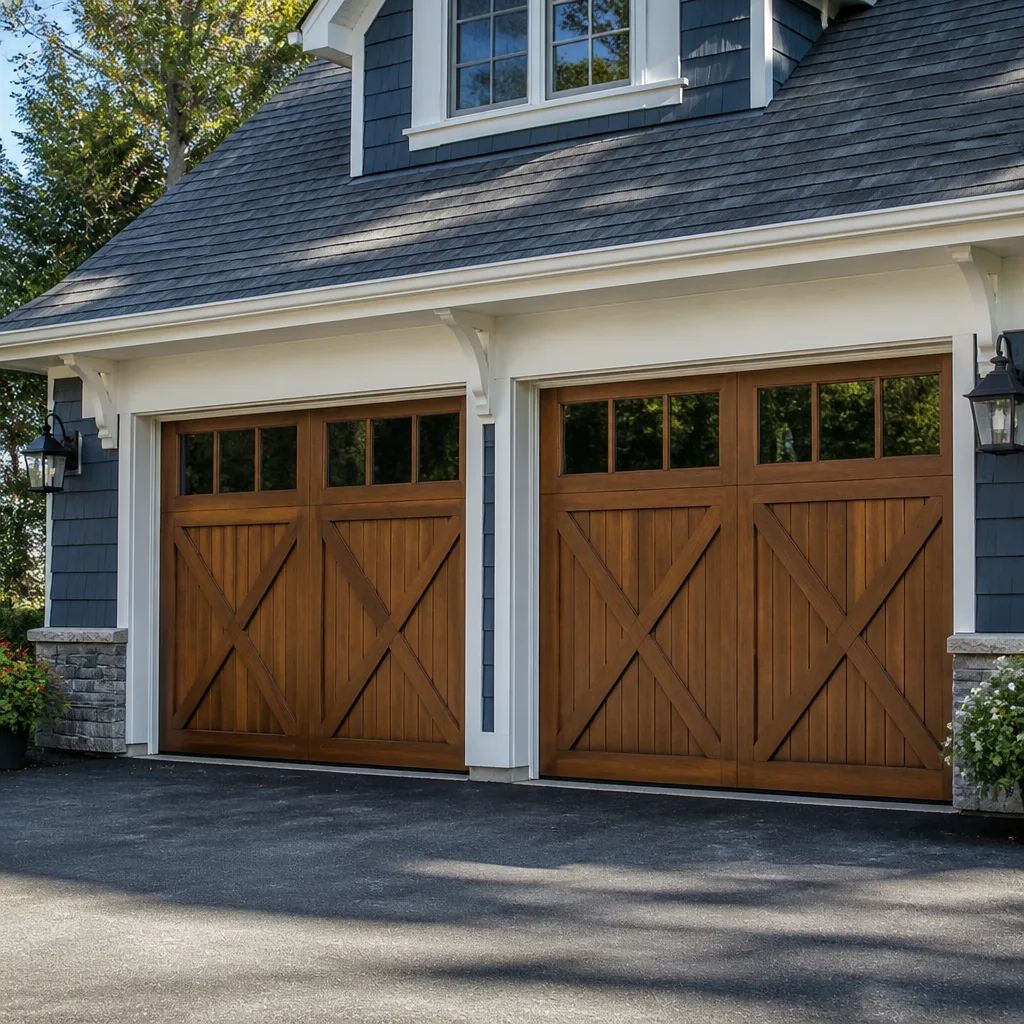 Carriage house
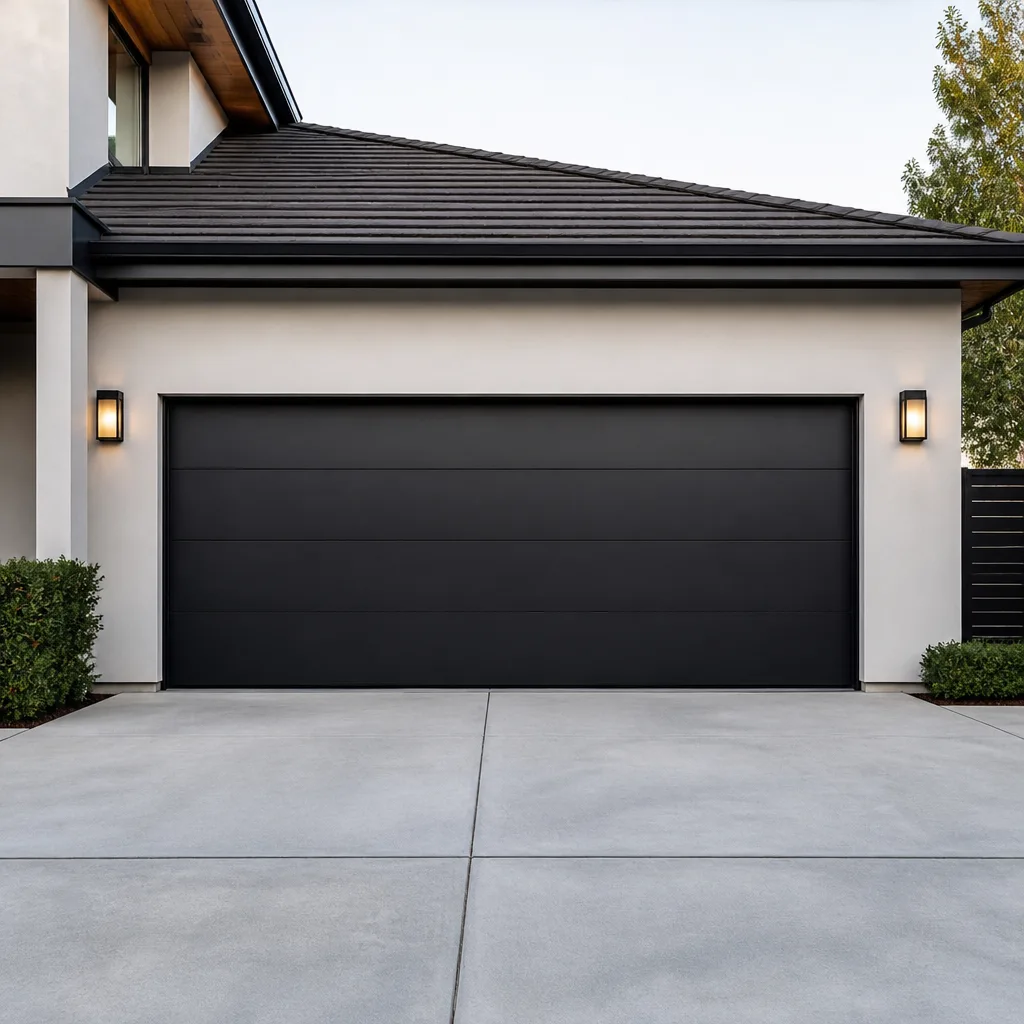 Modern flush
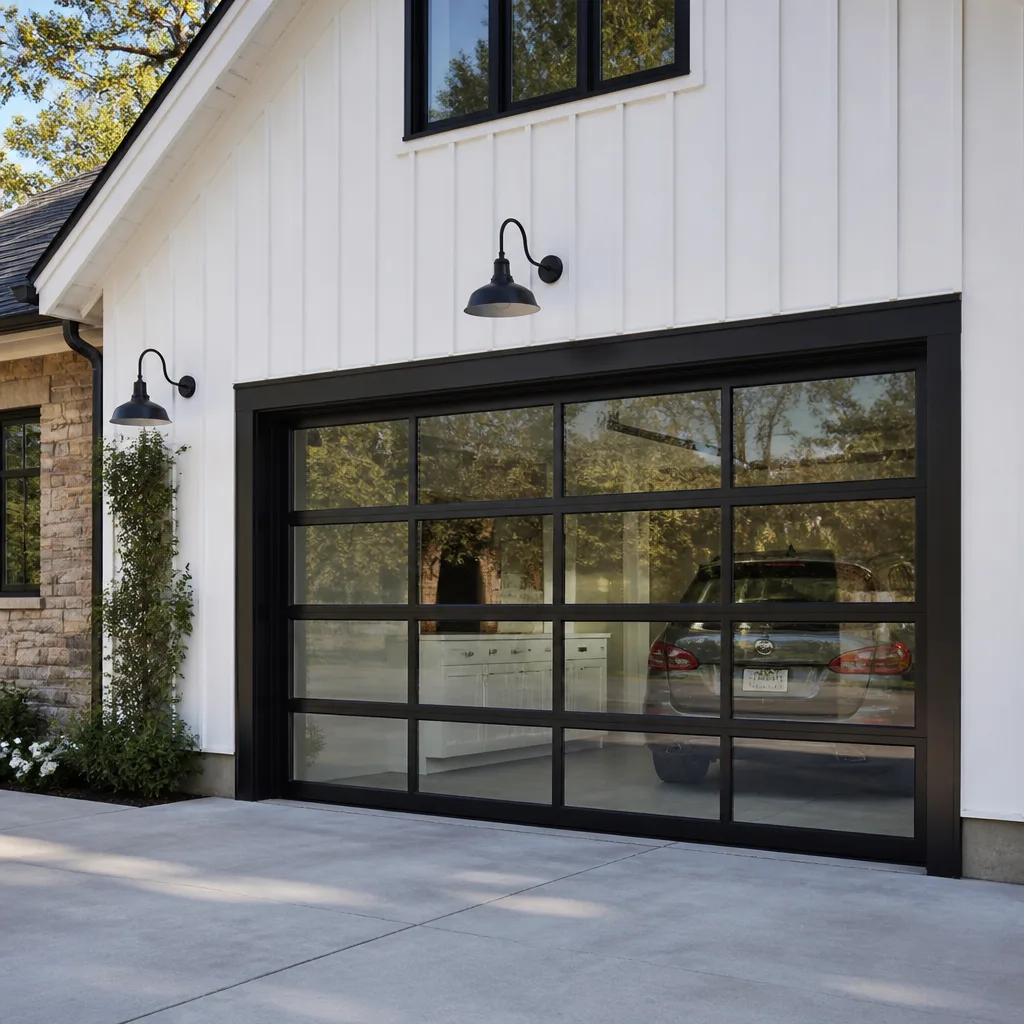 Full-view glass
 LiftMaster openers
 Chamberlain openers
Full 25-point door and opener safety check with every visit - springs, cables, rollers, tracks, and your LiftMaster or Chamberlain opener included
You get a price before we start. It does not change when the pro arrives.
Get your free estimateGarage Door Repair Maintenance Checklist for Hempstead Homeowners
Most homeowners think of garage door maintenance as a seasonal chore: spray a little lubricant, listen for squeaks, move on. That instinct is backwards. A garage door isn’t a set of independent parts that fail on their own schedule. It’s a chain of dependent systems, and the parts that fail first are almost never the ones that make noise. In Hempstead the failure sequence runs in a predictable order, and a checklist that ignores that order lets a small, cheap problem cascade into a big, expensive one. This guide lays out the correct inspection sequence, the parts that matter at each stage, what actually prolongs hardware life in Nassau County’s humidity, and which tasks are busywork that change nothing.
Quick Answer
A garage door maintenance checklist for Hempstead should inspect in this order: balance and torsion springs first, then cables and drums, then rollers and hinges, then tracks, then the opener’s safety features, then weather seals and finish. Checking springs before cables matters because spring tension determines cable load, and checking balance before running the opener prevents testing a door that’s no longer safe to cycle. Most of what matters can be caught in 20 minutes of inspection, and everything beyond that is either lubrication or a job for a trained technician.
Styles & brands we work with
- Raised-panel steel
- Carriage house
- Modern flush
- Full-view glass
- LiftMaster openers
- Chamberlain openers
Table of Contents
- The Correct Inspection Sequence (and Why Order Matters)
- Springs and Cables: The Safety-Critical Pair
- What Hempstead Humidity Does to Garage Door Hardware
- Which Lubricants Work in Nassau County Humidity (and Which Accelerate Wear)
- How to Test Balance, Travel Limits, and Auto-Reverse
- Rollers, Hinges, and Tracks: The Wear Parts
- Maintenance That Extends Hardware Life vs. Busywork
- Building a Maintenance Calendar Around Hempstead Seasons
The Correct Inspection Sequence (and Why Order Matters)
When we inspect a door, we don’t start with the opener. We start with the spring system and work outward. The reason is mechanical: the torsion spring (or springs, on most double doors) carries the full weight of the door. The cables are loaded by that spring tension. The rollers, hinges, and track only do their jobs correctly if the spring is balanced. If you test the opener before confirming the spring is intact and balanced, you can accelerate wear on the opener’s gear and rail, or worse, cycle a door whose cable is already compromised.
The full sequence, in the order that catches dependent failures:
- Visually inspect the torsion springs. Look for rust bloom, separation between coils, and a visible gap where a spring has snapped. Do this with the door fully closed and the opener disconnected from the door (pull the emergency release if it’s safe to do so).
- Inspect the cables and drums. Check for fraying near the drum and at the bottom bracket. A cable with broken strands is a load-bearing failure waiting to happen.
- Test door balance. Disconnect the opener and lift the door to the halfway point. A balanced door stays put; one that drops or rises indicates a spring problem.
- Inspect the rollers. Rollers that are cracked, flat-spotted, or missing bearings cause vibration that stresses hinges and tracks.
- Inspect the hinges and panel joints. Look for loose screws, bent hinge leaves, and cracks radiating from hinge points.
- Inspect the tracks. Check for dents, misalignment, and buildup. Tracks bent by a car bumper rarely cause problems immediately but will eventually bind the door.
- Test the opener’s safety features. Auto-reverse (with a test object), travel limits, and force sensitivity.
- Inspect weather seals and paint finish. Bottom seal, side seals, and any rust starting on steel panels.
Do this in order and you’ll catch the failure before it becomes an emergency. Skip to step 7 and you’ll chase symptoms instead of causes. For problems you find during the inspection, our garage door repair team can diagnose the door itself; if the issue is on the drive side, our garage door opener repair specialists handle that as a separate call.
Springs and Cables: The Safety-Critical Pair
Springs and cables are the two components of a garage door that can seriously hurt someone. Torsion springs hold tremendous stored energy, and when one fails, the torsion bar can spin violently. Cables under load can whip. We want to be direct about this: inspecting a spring for visible damage is fine. Replacing, adjusting, or “tensioning” a spring is not a homeowner task, and there is no safe shortcut. The same applies to cables, drums, and the bottom brackets that anchor them.
What you should look for during inspection:
- Rust bloom or orange powder around any coil of the torsion spring. Rust starts at microscopic cracks and spreads. Replacing a rusted spring before it snaps prevents an emergency.
- Visible separation in the spring’s coil path, indicating a snapped spring on one side.
- Frayed or broken cable strands at the drum or bottom bracket.
- Cables that are loose or wrapped unevenly around the drum. An unevenly wound cable usually indicates a balance problem.
- Bent or damaged bottom brackets. These are under tension and require professional service to replace.
Springs typically last several thousand cycles, and cycle count is what breaks them, not calendar time. A house where the door opens and closes four times a day runs through a spring in a fraction of the time it takes for a door that only opens and closes twice. In Hempstead where many households have daily commuters and multiple cars, cycle count adds up quickly. If you’re unsure of the state of your springs, our garage door spring repair team can assess them without guessing at the cycle count. What you should never do is attempt to swap a torsion spring yourself, no matter how straightforward the video looks.
What Hempstead Humidity Does to Garage Door Hardware
Nassau County’s summer humidity and the freeze-thaw cycles of winter are harder on garage door hardware than many homeowners realize. A garage is typically an unconditioned, semi-ventilated space. It swings through the same humidity changes as the outdoors, and it collects condensation on cold metal surfaces during warm, moist spells. The parts that corrode first, in our experience, are:
- Torsion spring coils, especially on doors facing the south or west where they get afternoon sun and run hotter. Heat accelerates the rust process on spring steel.
- Steel cables and drums. Bare cables pick up surface rust quickly in any garage that sees humid summers.
- Roller bearings. The small open bearings in cheap plastic rollers seize when their grease dries and moisture intrudes.
- Hinge knuckles and screws. The exposed steel on hinge joints rusts first, and rust welds the hinge pin in place.
- Bottom weather seals. Rubber hardens and cracks, letting moisture into the door’s bottom section and rusting the panel edge.
What slows all of this down is straightforward: keep the lubricant schedule, keep the bottom seal intact, and when you see rust starting on a hinge or roller, clean it off and re-lubricate rather than waiting for the joint to seize. For steel doors that face the weather, keeping the paint intact matters as much as lubricant. A Clopay or Amarr steel door with a chipped finish at the bottom edge will rust outward from that chip faster than the rest of the door. Touch up chips as you find them. Wayne Dalton composite doors hold up better against corrosion at the bottom, but their hinges and rollers still need the same attention.
If your garage door shows corrosion at the spring or cable level, that’s a sign to schedule a professional assessment. Our technicians have up to 8 years of experience identifying which components are at end of life and which just need cleaning and lubrication. Call (844) 443-3818 to book a diagnostic visit – estimates are free.
Which Lubricants Work in Nassau County Humidity (and Which Accelerate Wear)
The wrong lubricant is worse than no lubricant. In Nassau County’s humid summers, oils that attract grit can turn into an abrasive paste on the tracks and rollers. Products marketed as “garage door lubricant” vary enormously in quality, and a few common household substitutes actively damage the door.
What works:
- White lithium grease in a spray can, applied to hinges, roller bearings, and the spring coils (a light coat, not a heavy one). White lithium stays where it’s placed, doesn’t attract grit, and holds up to humidity.
- Silicone-based spray lubricant on the tracks, the weather seal, and any plastic or nylon components. Silicone is dry after it cures and won’t pick up dust.
- Dedicated garage door lubricant from a brand you trust, applied sparingly every few months.
What to avoid:
- WD-40 in the standard blue and yellow can. It’s a solvent, not a lubricant. It displaces moisture but doesn’t protect against corrosion long term, and it will strip the existing lubricant from a hinge or roller bearing.
- Motor oil, cooking oil, or any thin oil. Thin oils migrate off the parts they’re supposed to protect and capture dust on the way.
- Heavy gear grease on the tracks. Tracks should only ever get a light coat of silicone on the curve. Putting grease on a straight track turns it into a dirt magnet.
- Anything with graphite on a nylon roller. Graphite is meant for metal-on-metal; it can degrade the plastic bushings inside a roller.
The rule of thumb: lubricate the moving metal-to-metal parts (hinges, spring coils, roller bearings) with white lithium. Lubricate the sliding surfaces (track curve, weather seals) with silicone. Do that four times a year and you’ll get most of the benefit of a professional tune-up. Do it with WD-40 and you’ll be calling us sooner.
How to Test Balance, Travel Limits, and Auto-Reverse
These three tests reveal problems before they cause a door drop. Run all three quarterly.
Test 1: Balance
- Close the door and disconnect the opener using the emergency release cord (pull straight down and back).
- Manually lift the door to about waist height, then let go.
- A balanced door stays put or drifts less than a foot. A door that slams down or rises aggressively has a spring problem.
- Reconnect the opener by running it until the trolley engages the door’s carriage. If the door is unbalanced, do not run the opener until a technician has assessed it.
Test 2: Travel Limits
- Run the opener closed and note where the door stops. It should meet the floor without compressing the bottom seal excessively and without a visible gap.
- Run the door open and check that the top panel clears the header by a few inches but doesn’t overrun the opener rail.
- If the door stops short on either end, the limit settings on the opener need adjustment. On most Genie and LiftMaster units this is a set of screws on the opener head; check the manual.
Test 3: Auto-Reverse
- Lay a 2×4 flat on the floor in the middle of the door’s closing path.
- Close the door. It should reverse within a couple of inches of contacting the board.
- Also test the photo-eye (safety sensor) system by passing an object through the beam while the door is closing. The door should reverse immediately.
If any of these tests fails, stop running the door until a technician can look at it. A door that doesn’t auto-reverse is a serious hazard, especially for children and pets in households with kids. Our opener repair team handles sensor alignment, limit adjustment, and force-setting calibration on all major opener brands.
Rollers, Hinges, and Tracks: The Wear Parts
Rollers and hinges are cheap parts, but their condition determines how much stress passes into the opener, the spring, and the door panels. Flat-spotted or seized rollers cause vibration that hammers hinges and eventually cracks panels at the hinge points. Here’s what to check and how often:
- Rollers: Inspect quarterly. Replace nylon rollers that are cracked, flat, or missing bearings. Steel rollers with visible ridges or flat spots are near the end of life and should be replaced as a set. A ten-year-old door with original rollers is almost certainly due.
- Hinges: Inspect quarterly. Loose screws should be tightened (and never stripped – over-tightening a hinge screw is a common mistake). Rusted hinges should be cleaned and re-lubricated; severe rust means replacement.
- Tracks: Inspect twice a year. Look for bends, especially at the bottom curve. A slightly bent track can be straightened; a badly bent one needs replacement. Tracks should also be free of debris and dust buildup.
- Panels: Inspect twice a year. Look for cracks at hinge points and panel seams. A cracked panel weakens the door’s rigidity and can become a safety issue if the door is cycled.
- Weather seals: Inspect twice a year, replace when hard or cracked. The bottom seal is the most important for keeping out drafts and moisture.
- Fasteners: Inspect quarterly. Loose bolts at the hinge plates and the track brackets should be tightened to the spec in the door’s manual.
We work with doors from Clopay, Amarr, and Wayne Dalton regularly, and the wear pattern is consistent across all three brands. Rollers and hinges fail first; panels fail last. If you’re seeing panels crack, it’s usually a sign that rollers and hinges went too long without attention. Our Hempstead Garage Door Repair Pros team handles panel repair, roller replacement, and track straightening as part of the same visit.
Maintenance That Extends Hardware Life vs. Busywork
Not every item on a garage door maintenance checklist changes the outcome. Some tasks genuinely extend hardware life and others are things you do because they feel productive. Here’s the split, based on what we see actually preventing failures.
Maintenance that extends hardware life:
- Lubricating hinges and roller bearings quarterly. This is the single highest-value task a homeowner can do. Seized hinges cause panel cracking; seized bearings cause vibration and premature roller failure.
- Testing auto-reverse quarterly. A failing safety reverse is both a safety hazard and a common cause of opener damage (a door that doesn’t reverse correctly can bind the opener’s gear).
- Replacing rollers as a full set when more than one shows flat spots. Mixing new and old rollers causes uneven wear across the rest.
- Balancing the door quarterly. Catching a slowly weakening spring before it fails lets you replace it on your schedule rather than as an emergency.
- Keeping the bottom seal intact. It’s a cheap part that protects a panel edge from rust and your garage floor from water intrusion.
- Inspecting cables for fraying. A frayed cable is a genuine failure; replacing it before it breaks prevents an emergency.
Busywork that changes nothing:
- Polishing the tracks. A clean, dry cloth is all a straight section of track needs. Grease or polish on a straight track attracts dirt.
- “Adjusting” the spring tension yourself. Doing it wrong is a safety hazard; doing it right requires knowing how much adjustment the door needs, which only a technician can measure.
- Replacing good rollers because they look old. Nylon rollers can last a decade; replace them when they’re cracked or flat, not by appearance alone.
- Painting over rust on hinges. Rust under paint spreads. Clean rust to bare metal and lubricate, don’t cover it.
- Tightening every bolt you see. Over-tightening fasteners or torquing beyond spec can crack hinge leaves and strip threads.
- Running the opener more often to “test” it. Cycle count is what wears out springs. Test only when there’s a reason.
Building a Maintenance Calendar Around Hempstead Seasons
You don’t need a complicated schedule. You need to put the right tasks at the right time of year, in the right order. Here’s how we’d approach a Hempstead homeowner’s annual calendar:
- Late winter (after the last freeze): Full inspection, in the sequence above. Freeze-thaw cycles are hard on springs and seals, and a full walkthrough catches anything that developed over the winter.
- Spring (before summer humidity): Lubricate hinges, rollers, and springs. Replace anything that’s rusted. Check the bottom seal for cracks.
- Midsummer: Quick balance and auto-reverse check. Summer is when humidity-driven corrosion shows up on cables and hinge joints.
- Early fall (before winter): Full inspection again. Replace worn rollers and hinges before the door sees cold weather and heavier use.
- Before winter: Check the opener’s force setting and travel limits. Cold-weather binding makes a weak opener fail.
That’s an inspection, a lubrication pass, a safety check, and a second inspection. The rest is spot work as you find problems. The homeowner who follows this pattern catches most failures before they cause a trapped car or a door that won’t close on a cold evening.
Common Mistakes to Avoid
- Checking the opener before the spring. A door whose spring is compromised can cycle fine on a light opener, hiding the problem until it fails. Always confirm balance first.
- Using WD-40 as a garage door lubricant. It dissolves the grease that the rollers and hinges need, then evaporates without leaving protection. Use white lithium for metal and silicone for tracks.
- Ignoring rust on the torsion spring. Rust is the earliest visible signal that a spring is failing. It’s cheap to replace a rusted spring on schedule; it’s expensive to be trapped by a snapped one.
- Replacing one roller. A single new roller alongside nine worn ones creates uneven wear and a wobbly door. Replace rollers as a set.
- Attempting a spring replacement or cable replacement yourself. Torsion springs and cables are under extreme tension and cause serious injuries. It’s not a difficult repair, but it is a dangerous one, and it belongs with a trained technician.
- Letting the bottom seal degrade. Once the bottom edge of a steel panel rusts, the rust spreads into the door’s structure. A ten-dollar seal protects a multi-hundred-dollar panel.
- Skipping the auto-reverse test. It’s a 30-second test that prevents a serious hazard. There’s no good reason to skip it, and there’s real risk in doing so.
See the difference
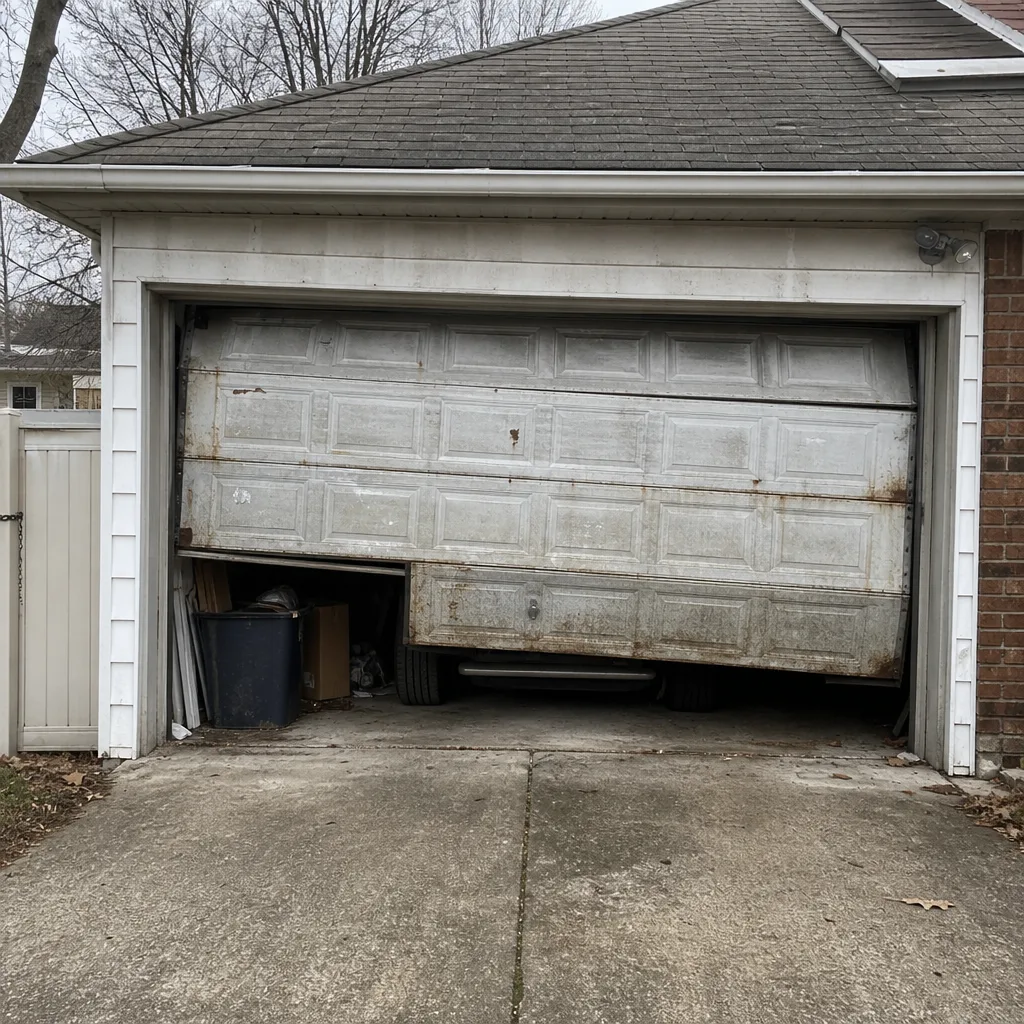 Before
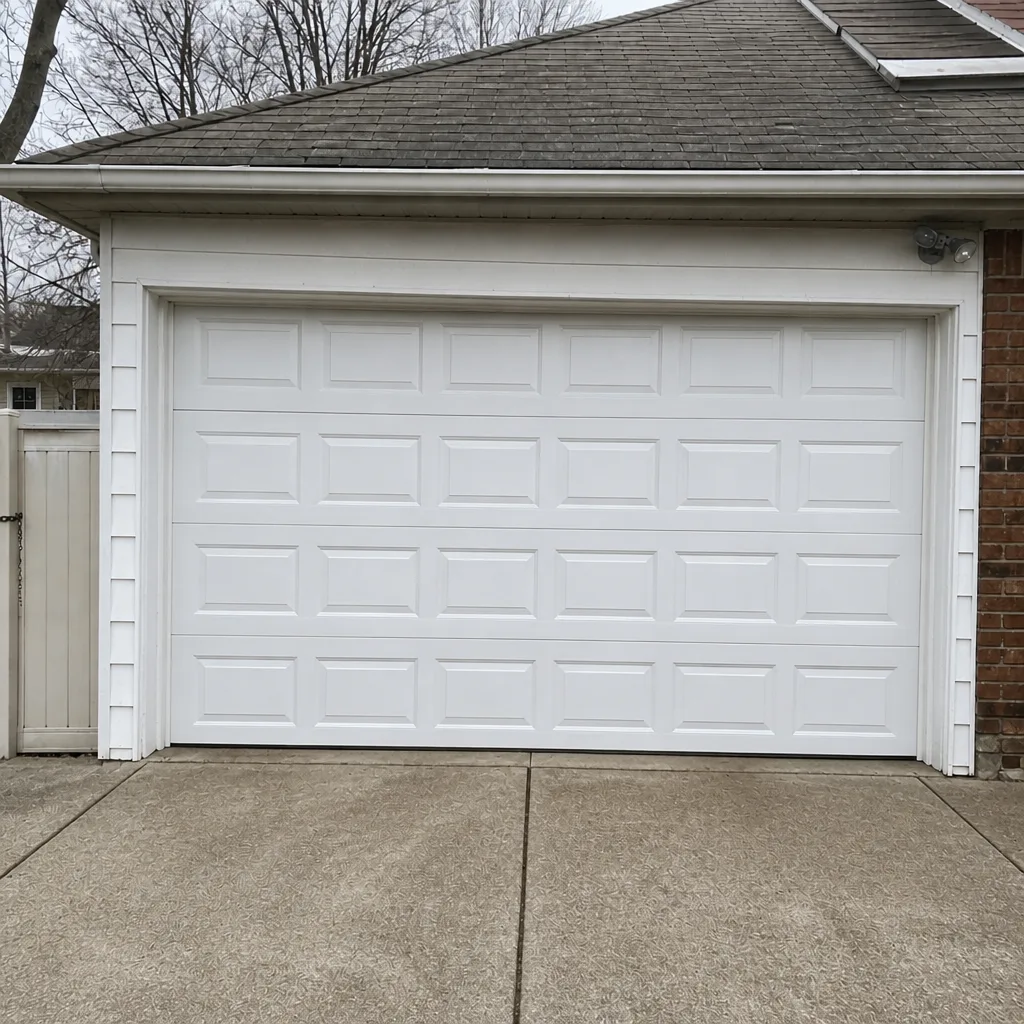 After
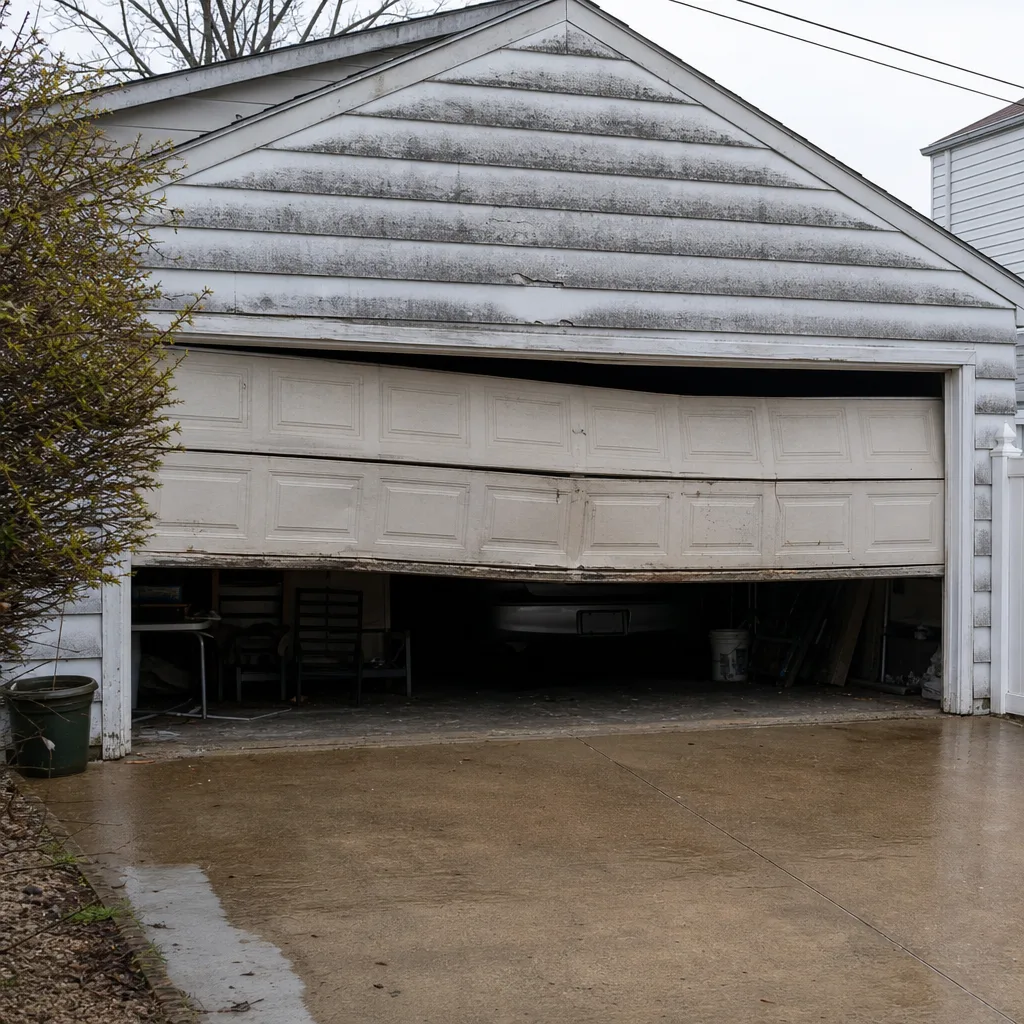 Before
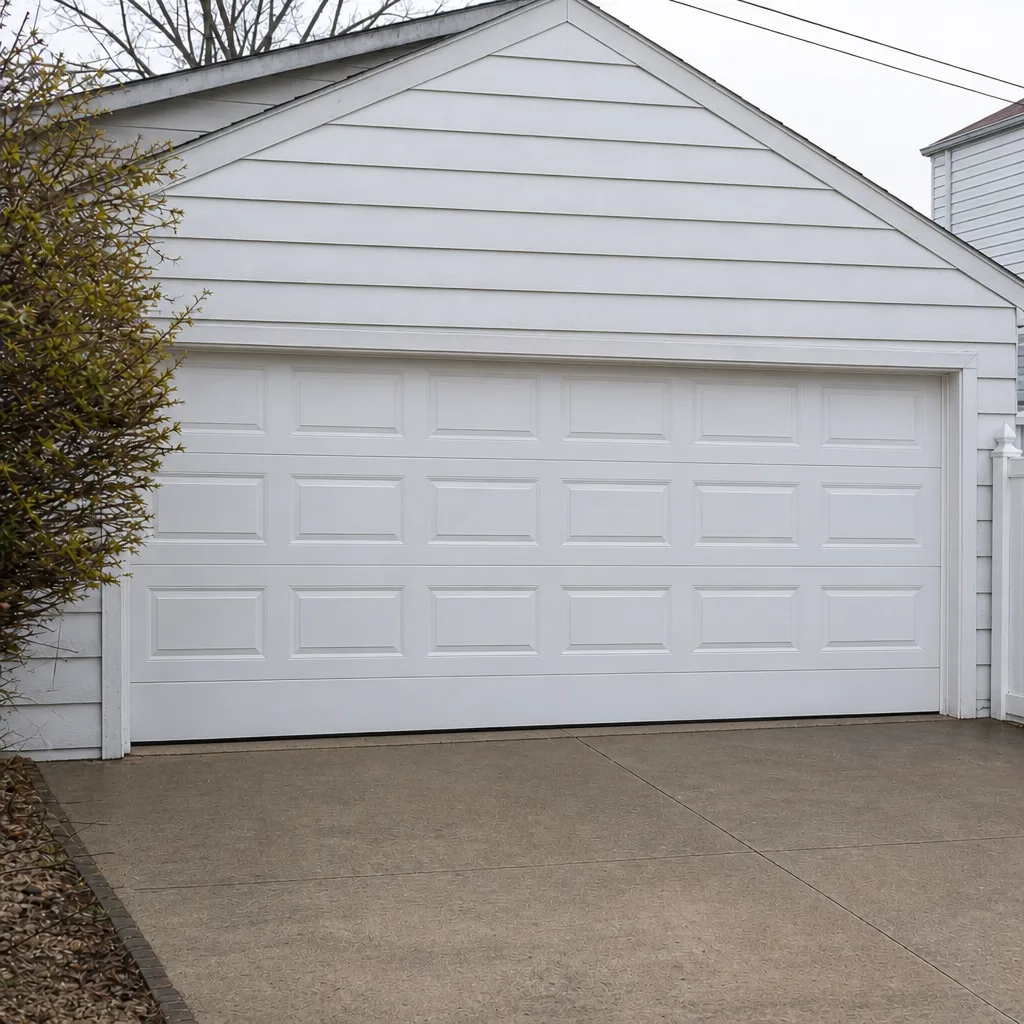 After
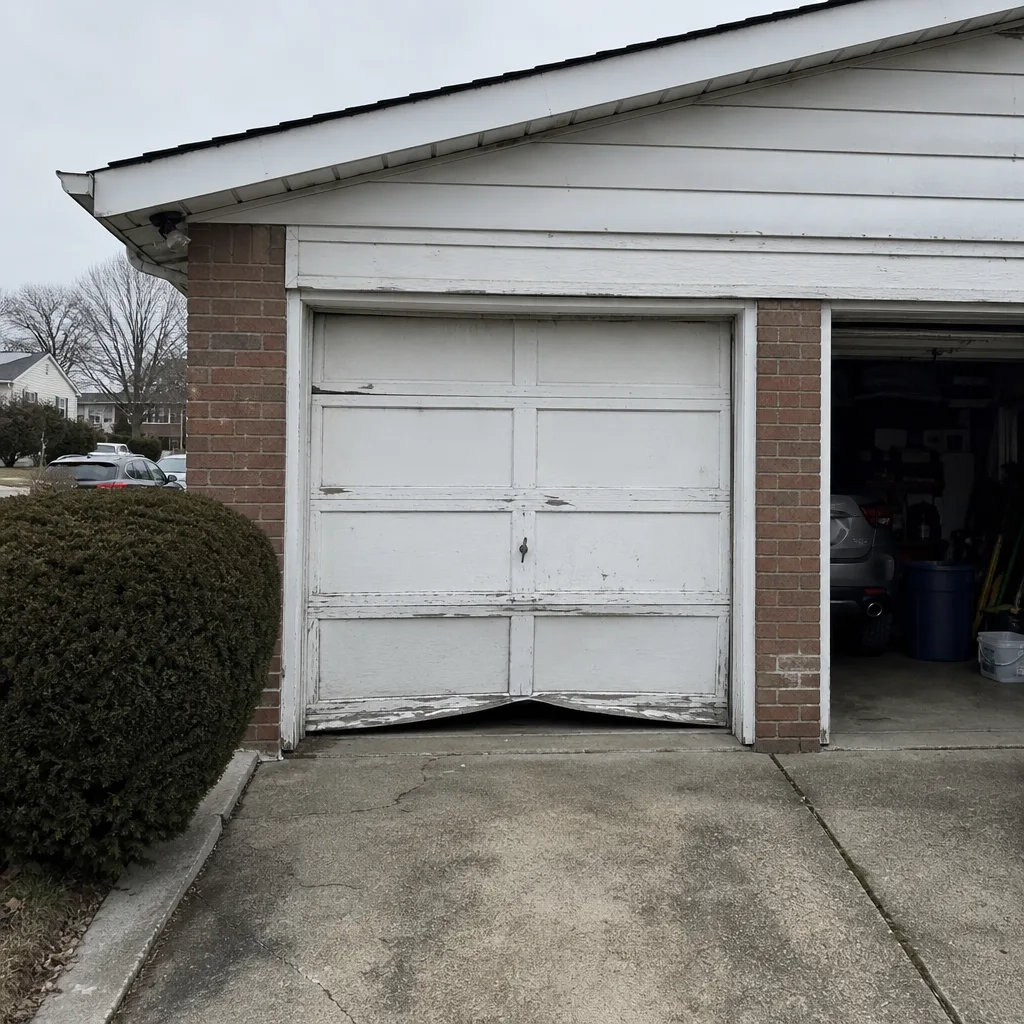 Before
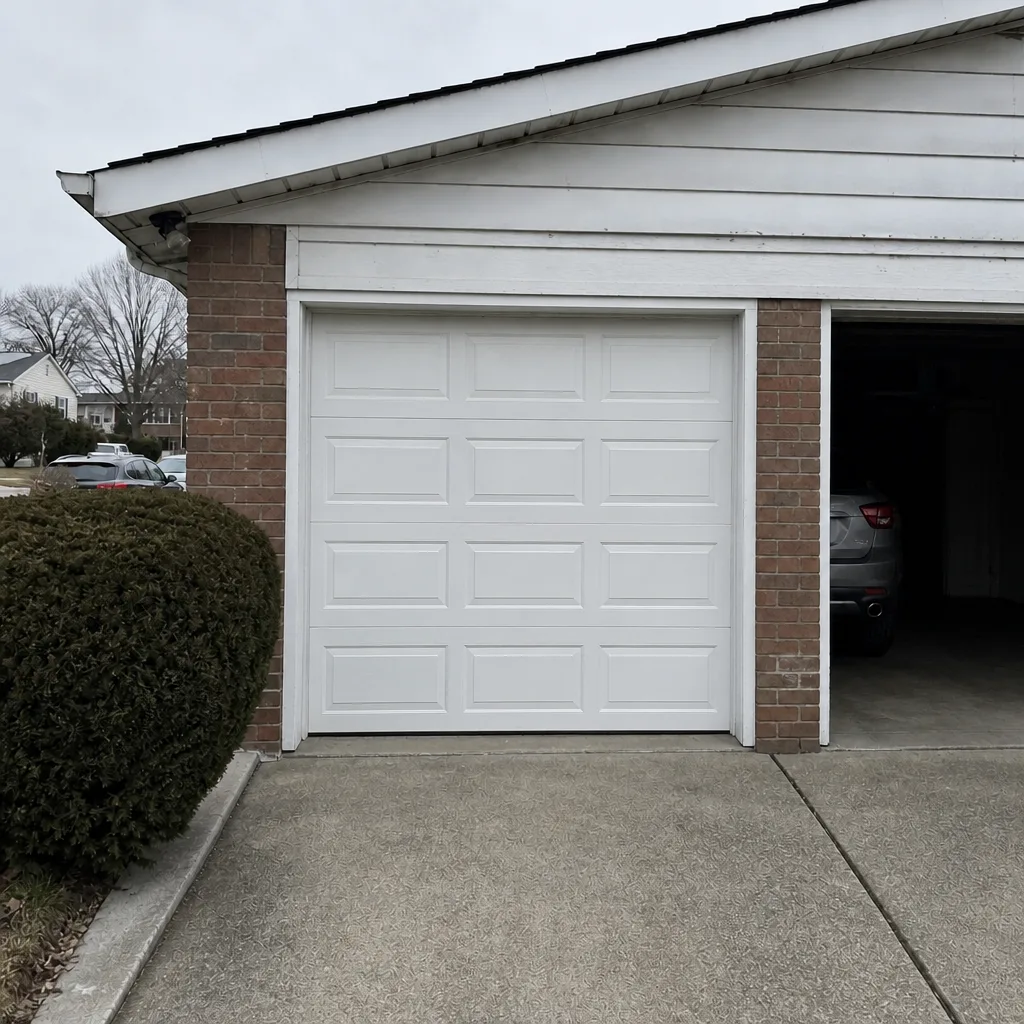 After
When to Call a Professional
Some failures are worth handling yourself, like replacing a bottom seal or swapping a roller. Others are not. Call a technician if you find a broken or visibly rusted torsion spring, a frayed or slack cable, a door that won’t balance, an opener that reverses inconsistently or won’t reverse at all, bent tracks, or a panel that’s cracked at a hinge point. Call us if you’re not sure. Hempstead Garage Door Repair Pros offers free estimates in Hempstead – call (844) 443-3818. Our technicians have up to 8 years of experience and work on Genie, Clopay, Amarr, Wayne Dalton, LiftMaster, Chamberlain, Craftsman, and Raynor systems daily. We handle spring repair as a dedicated service, opener repair, panel and door repair, and full installation in a single call. Emergency service is available if a failure leaves a car trapped or a home unsecured.
Frequently Asked Questions
A full inspection twice a year and a safety check quarterly. The Hempstead climate’s humid summers and freeze-thaw winters accelerate corrosion on springs, cables, and hinges, so a full inspection at the end of winter and again at the start of fall catches most issues before they become failures. Call (844) 443-3818 to schedule a professional inspection. Estimates are free.
The torsion spring, because it carries the full weight of the door and everything else depends on it. Check it first for rust, visible separation, or a gap in the coils. If the spring is compromised, don’t run the opener until a technician has looked at it. Our garage door spring repair team handles the diagnosis and replacement safely.
Rust on a torsion spring means the spring needs replacing, not repairing. Surface rust is an early warning that the steel is losing integrity, and a rusted spring is on its way to snapping. Replacing it on schedule is a planned repair. Waiting until it snaps turns it into an emergency and can damage the door, the cables, and the opener. Call (844) 443-3818 if you see rust on your springs.
White lithium grease on hinges, roller bearings, and spring coils, and silicone spray on tracks and weather seals. Avoid WD-40 in its standard formula, thin oils, and anything with graphite on nylon rollers. In Nassau County’s humidity, the wrong lubricant attracts grit and accelerates wear. A quarterly application of the right products is most of what a homeowner needs to do.
Usually a photo-eye sensor misalignment, a travel limit set too low, or a force setting that’s too sensitive. Clean the sensor lenses first, then check that they’re pointing at each other. If that doesn’t fix it, the opener’s limit or force setting needs adjustment, which our garage door opener repair technicians can handle on Genie, LiftMaster, Chamberlain, and Craftsman units. Call (844) 443-3818 for a same-day diagnostic visit.
Homeowners can handle lubrication, bottom seal replacement, and the quarterly safety tests. Spring inspection, cable inspection (beyond what’s visible), and any adjustment to the spring system should be handled by a trained professional. The risk of a DIY spring or cable repair is genuine. What most homeowners benefit from is an annual professional inspection to catch what a homeowner inspection misses. Our team walks the whole door, end to end, and gives you an honest assessment of what needs work now versus what can wait.
The Bottom Line
A garage door maintenance checklist works when it follows the right order. Check springs and cables first, because everything else depends on them. Then rollers, hinge points, and tracks. Then balance and the opener’s safety features. Then seals and finish. In Hempstead, the failure sequence runs from rust on the spring to a bow in the cables to wear in the rollers to a bend somewhere in the track to an opener that’s working too hard. Catch it at step one and you’re looking at a cheap replacement. Catch it at the bottom and you’re looking at a real repair. Lubricate quarterly with the right products, run the balance and auto-reverse tests on the schedule we laid out, and let a professional handle anything involving the spring system or cables. Call us when you find something you’d rather not touch.
Get a Free Estimate From Hempstead Garage Door Repair Pros
If anything on this checklist flagged a problem, or if it’s been a while since your door had a proper inspection, we’re a phone call away. Our technicians have up to 8 years of experience in this trade, work on all major garage door and opener brands, and can diagnose what’s actually wrong with your door versus what’s fine for another season. We handle repair, opener repair, spring repair, and full installation in a single visit. Emergency service is available if a failure has left a car trapped or a home unsecured. Call (844) 443-3818 for a free estimate – the price you agree to before work starts is the price you pay.
Written by the team at Hempstead Garage Door Repair Pros.