Last updated November 23, 2026
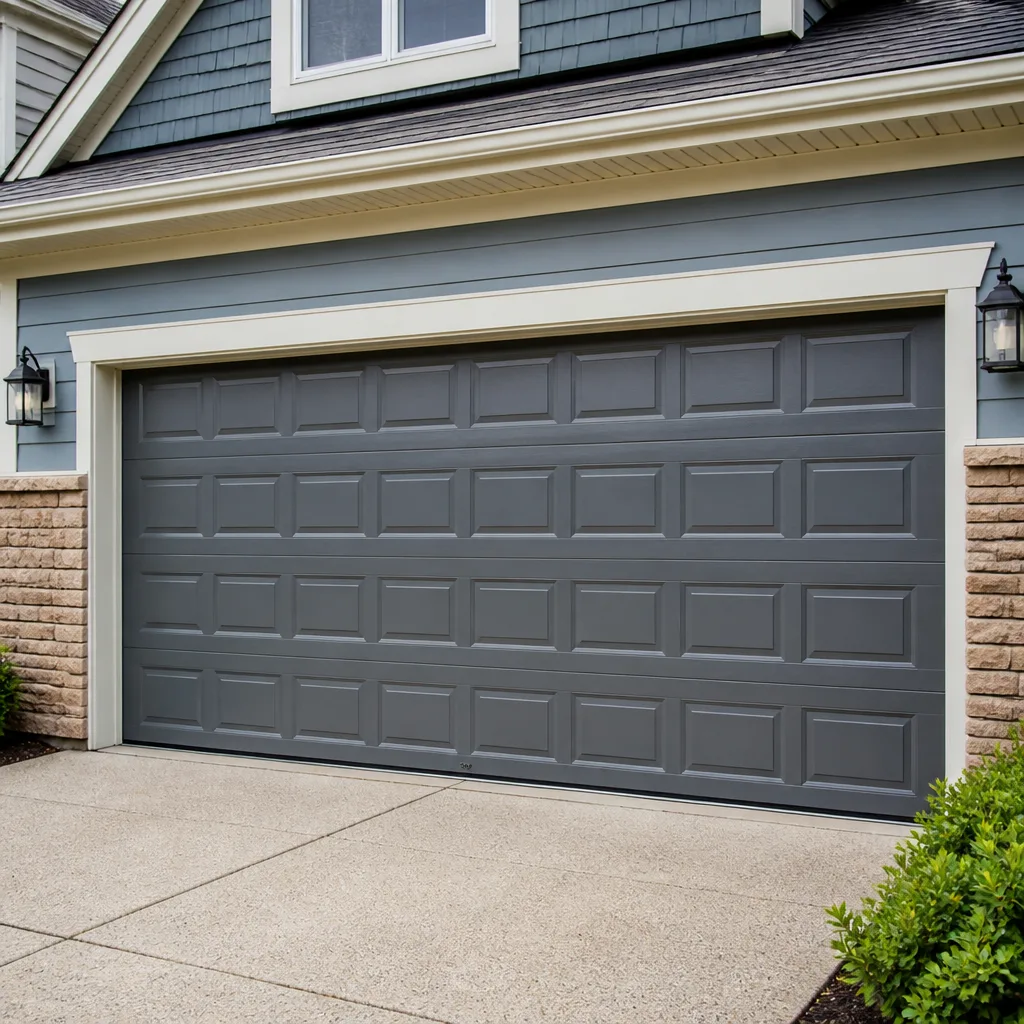 Raised-panel steel
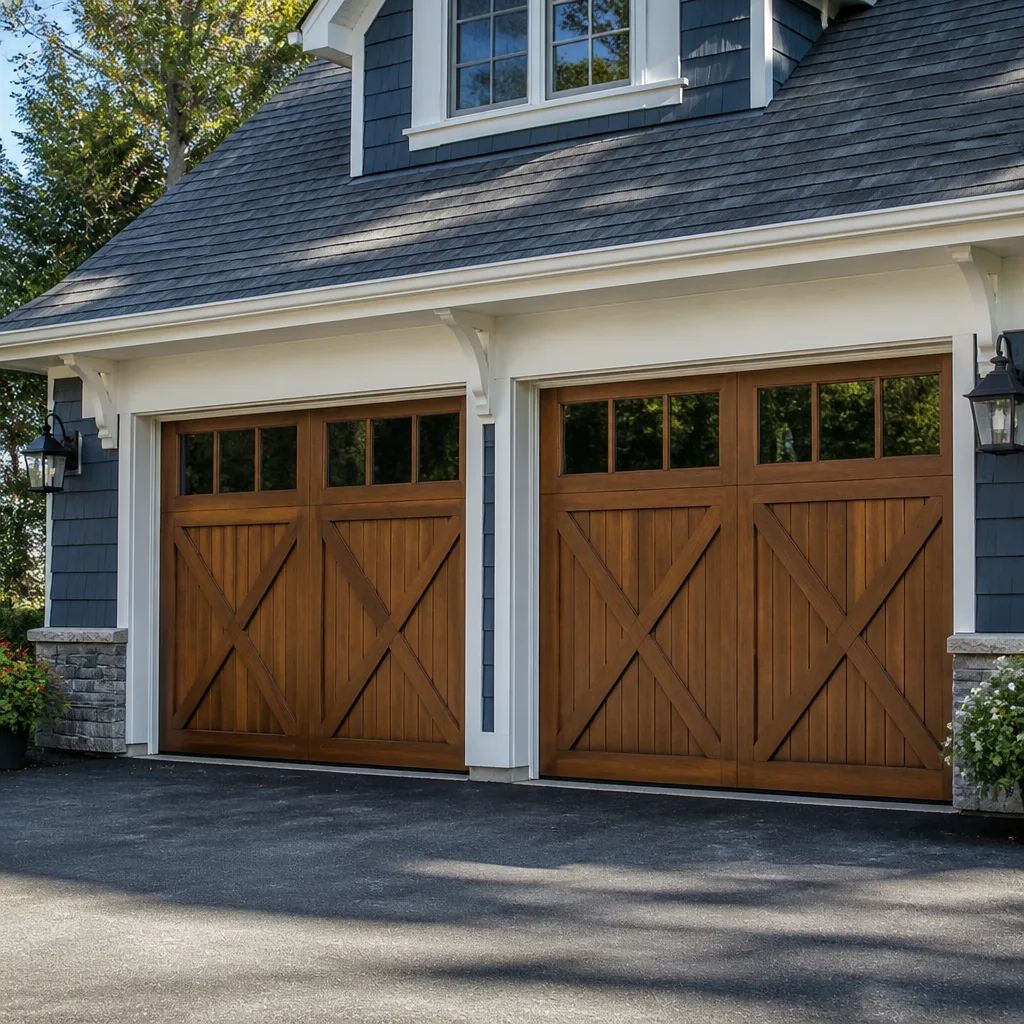 Carriage house
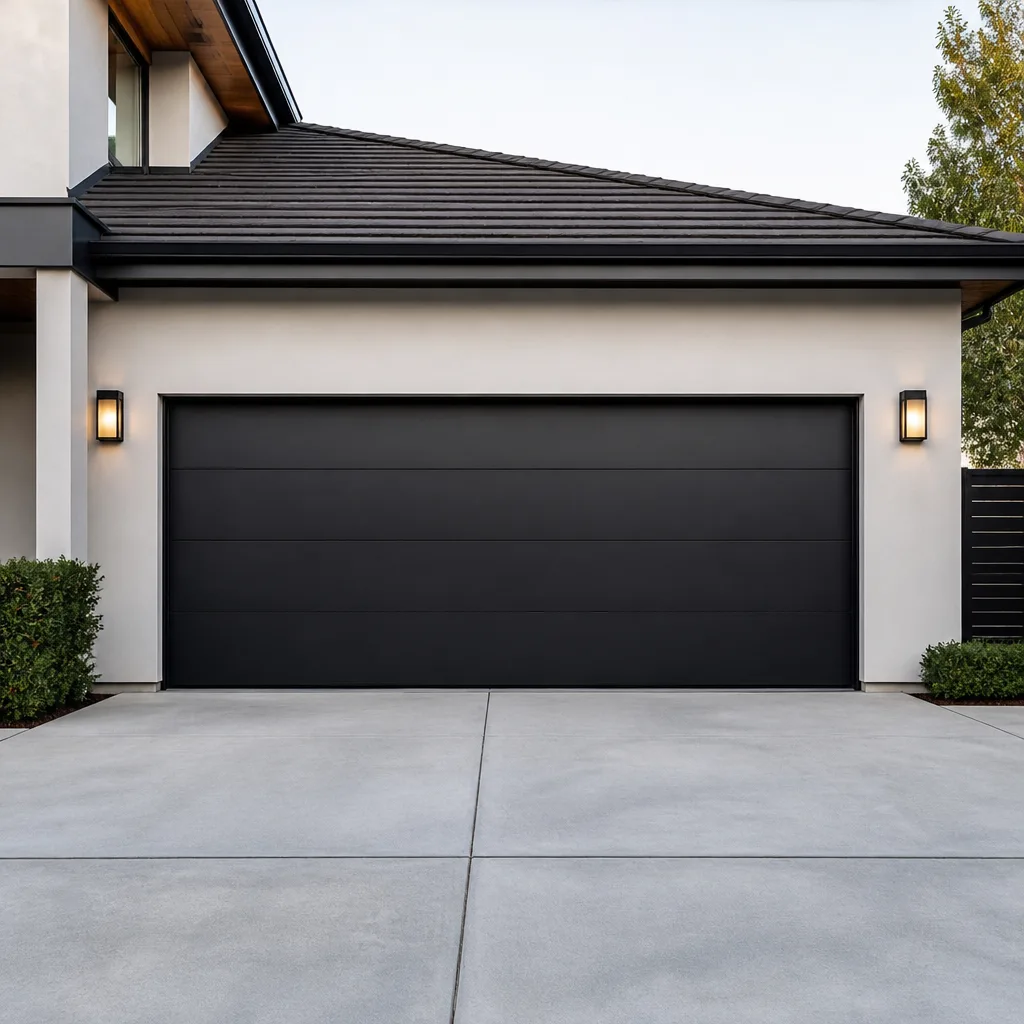 Modern flush
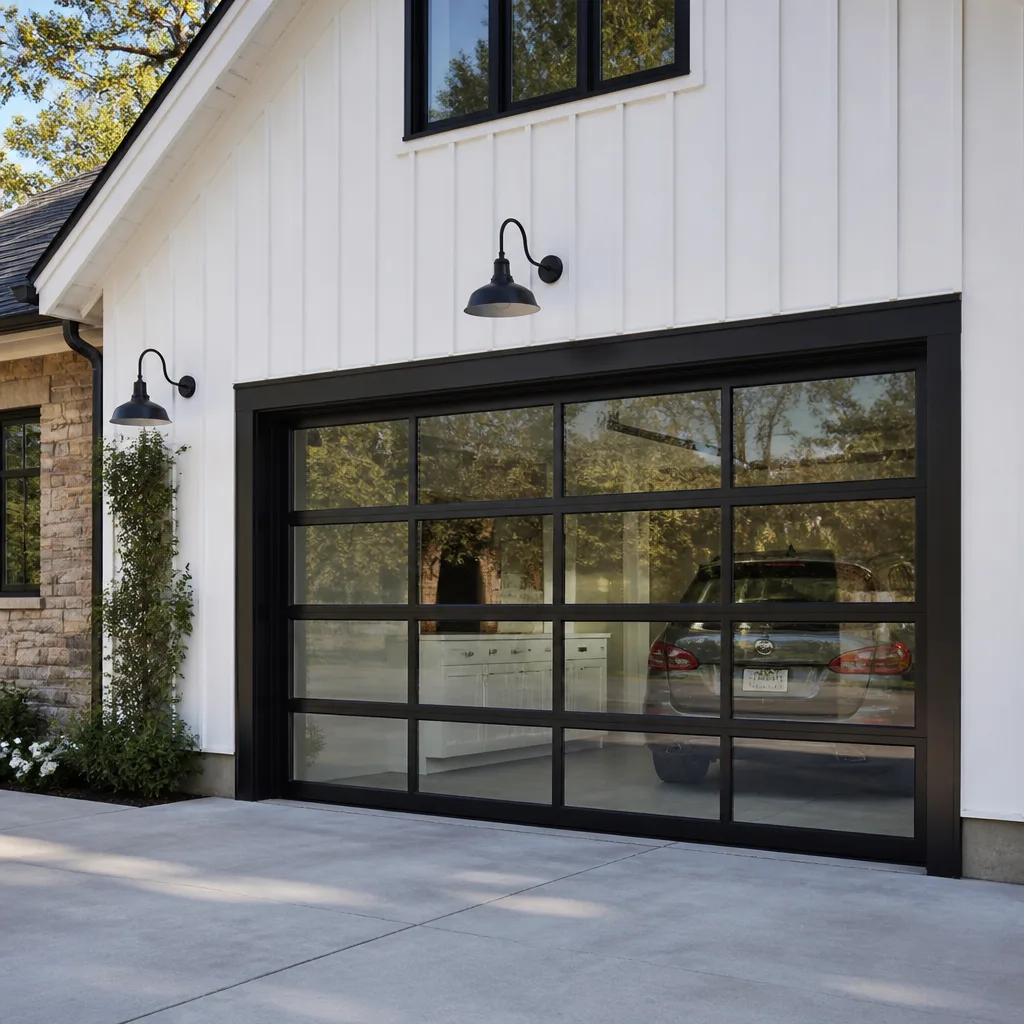 Full-view glass
 LiftMaster openers
 Chamberlain openers
Full 25-point door and opener safety check with every visit - springs, cables, rollers, tracks, and your LiftMaster or Chamberlain opener included
You get a price before we start. It does not change when the pro arrives.
Get your free estimateGarage Door Warning Signs: A Hempstead Homeowner’s Reference Guide
A door that takes two seconds longer to open than it did six months ago isn’t “getting old.” That extra hesitation is often a torsion spring that’s lost tension and is quietly handing its load to your opener motor. Most garage door failures announce themselves weeks ahead of time, and the reason they still catch people off guard isn’t that the signs are hidden. It’s that nobody told them what they were looking at. In this guide we walk through the sounds, sights, and behavior changes that predict a breakdown, what each one points to inside the door, and which ones you can handle yourself. We’ll also explain how Hempstead’s damp summers put their own stamp on the warning signs you’ll see here.
Quick Answer
Garage door warning signs fall into three groups: sounds (grinding, popping, rattling, squealing), visual cues (frayed cables, rust-streaked springs, worn rollers), and opener behavior (delayed response, reversing mid-travel, limit-hunting). Each one points to a specific failing component, and most appear weeks before the door actually stops working. Anything involving springs, cables, or electrical work on the opener needs a trained technician, not a homeowner with a wrench.
Styles & brands we work with
- Raised-panel steel
- Carriage house
- Modern flush
- Full-view glass
- LiftMaster openers
- Chamberlain openers
Table of Contents
- What Your Door’s Sounds Are Telling You
- Visual Warning Signs Most Homeowners Look Right Past
- Decoding Your Opener’s Behavior Changes
- Warning Signs That Are DIY-Safe vs. Hands-Off
- How Hempstead Humidity Leaves Its Own Warning Signs
- A Season-by-Season Checklist for Hempstead Doors
- How to Track Your Door’s Decline Over Time
- Common Mistakes to Avoid
What Your Door’s Sounds Are Telling You
Sound is the first thing we ask about when a homeowner calls us for garage door repair. A garage door is a mechanical system with a predictable sound signature, and any change to that signature means something specific has shifted. The trick is knowing which noise maps to which part.
- Grinding usually means metal-on-metal friction, most often at the rollers or the hinges. Dry hinge pins and worn roller bearings produce a low, gravelly grind that gets louder as the door travels up. If the grind is coming from the opener itself, the internal gears are wearing down.
- Popping is the sound of tension releasing in a snap, and it very often points to a torsion spring that’s on its last legs or a cable that’s slipping a drum. A single sharp pop followed by a door that won’t lift is a classic broken spring signal.
- Rattling is usually loose hardware: hinge bolts backing out, track brackets loosening against the wall, or a torsion bar with worn end bearings. It rarely means imminent failure, but it does mean the system is shaking itself apart slowly.
- Squealing is almost always dry rollers, dry hinges, or a torsion spring that needs lubrication. High-pitched and continuous means friction; intermittent and rhythmic means a specific component is binding once per revolution.
Recording a short video on your phone while the door cycles open and closed is one of the most useful things you can do before calling. A technician can often diagnose the failing component from the sound alone before setting foot on your property. We work on LiftMaster and Chamberlain openers regularly and their internal sound profiles are distinct from Genie units, which is one reason brand familiarity speeds up a diagnosis.
Visual Warning Signs Most Homeowners Look Right Past
The most dangerous warning signs are the ones you can only see, because they aren’t loud enough to get your attention. A monthly visual pass along the door’s hardware takes about two minutes and catches problems early.
- Frayed or worn cables. Stand to the side of the door (never underneath it) and look at the two steel cables running down each side. A healthy cable is smooth and uniform. A failing one shows broken individual strands, a fuzzy texture near the drum end, or a section that’s flattened and kinked. Frayed cables are a prelude to full failure and need a pro.
- Spring rust signatures. Look at the torsion spring above the door or the extension springs along the tracks. Light surface rust is normal. Deep orange-brown pitting, especially on the coils where tension is highest, means the steel is thinning from the inside out. A spring snapping while you’re standing under it is the single most dangerous event in a garage door system.
- Roller wear. Every door has 10 to 12 rollers. Spin each one by hand and look at the face. Steel rollers should turn smoothly; nylon rollers should be free of flat spots and cracks. A wobbly roller is not far from seizing, and a seized roller grinds a groove into your track.
- Panel alignment. Step back and look at the door as a whole. A panel that’s slightly out of square, a hinge that’s pulling away from the panel skin, or a visible gap along the bottom edge all point to the door flexing more than it should.
In our experience in Hempstead, cable fraying is the visual sign that gets missed most often, because it happens on the side of the door most people don’t stand on. It’s worth a deliberate look each month.
Decoding Your Opener’s Behavior Changes
Openers don’t usually fail all at once. They degrade in patterns, and each pattern maps to a specific piece of the unit. Here’s how to read them without a manual.
- Delayed response. If you press the button and nothing happens for a second, then the door lurches into motion, the opener is drawing more current than it should. That’s a sign of a failing capacitor, sticky limit switch, or a door that’s gotten heavier than the motor expects. Delayed response is your door telling you the balance is off.
- Reversing mid-travel. The door starts down, stops, and goes back up on its own. This is a limit-switch or safety-sensor issue. Sometimes it’s just a misaligned photo-eye, sometimes it’s a worn gear. Modern LiftMaster and Chamberlain units built after 1993 have safety-reversal systems that must be tested monthly, and a unit that reverses for no clear reason should be inspected before someone gets hurt.
- Limit-hunting. The door doesn’t stop in the same place twice. One cycle it stops an inch short, the next it stops an inch long. Limit-hunting means the travel limits are slipping, usually due to worn gears or a loose limit screw. On older units this is a common failure point.
- Remote range shrinking. If you used to open the door from three houses down and now you have to be in the driveway, the receiver board is losing signal sensitivity or the battery in the remote is weak. Rule out the battery first, then look at the opener.
When these signs cluster together, that’s when we recommend garage door opener repair before the motor burns out. A motor that fails under load often damages the gear assembly on the way out.
Warning Signs That Are DIY-Safe vs. Hands-Off
Not every warning sign is a call to a professional, but some absolutely are. Here’s our honest split.
Safe to handle yourself
- Lubricating hinges, rollers, and the torsion bar with garage door lubricant (not WD-40).
- Tightening loose bolts on the hinges and track brackets.
- Cleaning the photo-eye lenses and checking that the sensors are aligned.
- Replacing the remote battery.
- Clearing debris that’s blocking the tracks.
Hands off, every time
- Anything involving the torsion spring. A torsion spring under a fully wound door holds enough stored energy to cause serious injury. Never try to adjust, tighten, or remove one yourself. This is the single most common repair we handle, and it belongs to a pro. Our garage door spring repair service exists because most people shouldn’t touch a spring, ever.
- Cable replacement or re-tensioning. Cables and springs work together. If a cable snaps while you’re near it under tension, the result is dangerous. Leave cables to a technician.
- Track bending or realignment. Tracks that are out of true will cause the door to fall out of the vertical path, and you can’t eyeball a true alignment.
- Electrical work on the opener. Wiring, capacitor replacement, and control board work should only be done by someone trained for it.
We’d rather you call us for a free estimate on a $200 tightening than have you learn the hard way that a spring detensioned in the wrong direction can take a finger. The precaution is worth it every time.
How Hempstead Humidity Leaves Its Own Warning Signs
Hempstead sits in a humid summer climate, and that shifts which warning signs you’ll see first. Doors in drier parts of the country fail differently, and knowing what to look for here saves you from mistaking an environmental symptom for a mechanical one.
- Rust streaking on the springs. Where a drier climate would show spring fatigue primarily as sagging or lost tension, Hempstead’s summer humidity accelerates surface corrosion. Rust streaks on the torsion spring, or orange drip trails running down from the spring bracket, are a warning sign that would rarely appear in Phoenix. Treat them as a spring-health check, not a cosmetic issue.
- Weather seal shrinkage. The rubber seal along the bottom of the door expands and contracts with humidity changes. In Hempstead, seals that sit through a wet spring and a dry fall will eventually shrink and pull away from the door, leaving a visible gap. If you can see daylight under the closed door, the seal is spent and the door is inviting water and pests into the garage.
- Panel swelling. Wooden and composite panels absorb moisture along the edges. Look for paint peeling from the bottom edge upward, panels that look slightly wavy near the seams, and any spot where the panel is bulging past the stiles. Panel swelling changes the door’s weight distribution, which then overloads the opener.
- Track rust at the anchor points. The brackets that hold the track to the wall can rust underneath the paint. Look for bubbling at the anchor holes. Rusty brackets can fail under load during a heavy door cycle.
If you see two or more of these at once, that’s the point where a Hempstead door usually needs a professional look rather than another coat of paint.
A Season-by-Season Checklist for Hempstead Doors
Garage door maintenance in Hempstead doesn’t need to be complicated. A short pass in each season catches most warning signs before they become failures.
- Early spring. After a Hempstead winter, inspect the torsion spring for rust streaks and check the bottom seal for shrinkage. Both of these are accelerated by the wet spring thaw.
- Late spring. Test the safety reversal system by placing a small object (a roll of paper towels works) in the door’s path and confirming the door reverses. Do this on your LiftMaster or Chamberlain unit monthly; if it fails to reverse, call for service immediately.
- Summer. Lubricate the hinges and rollers. Listen for changes in the sound of the door as the air gets humid. Squealing that appears or worsens in July and August usually points to dry hinge pins.
- Fall. Look at the cables. Cables get more stressed in cold weather when metal contracts. Any fraying you see in fall will be a bigger problem by December.
- Winter. Check that the door travels smoothly and that the opener isn’t straining. Cold weather thickens the lubricant and stiffens the door, so any existing wear becomes more audible.
If you can remember when you last lubricated the door, that’s your reminder. If you can’t, it’s probably time.
How to Track Your Door’s Decline Over Time
A door that’s failing slowly is easy to miss because you adjust to the change gradually. Here’s how to write down what you’re seeing so a professional can diagnose it accurately.
- Time the cycle. Use the stopwatch on your phone and time a full open. Do it again a month later. A door that goes from 12 seconds to 15 seconds over six weeks is telling you the opener is working harder against a heavier load.
- Photograph the springs monthly. A photo of the torsion spring taken at the same angle each month will show you rust progression, sag, and any new marks that you’d otherwise miss.
- Note when the door was last lubricated. Lubrication is the single maintenance item that most affects sound and wear. A door that’s been lubricated twice a year lasts noticeably longer than one that’s never been touched.
- Keep a call log. Every time you reset the opener or adjust a sensor, write the date. Multiple resets in a single quarter mean the underlying problem has changed.
When you call us with specific observations, we can often tell whether a technician is needed that day or whether you can wait for a scheduled appointment. That clarity is worth the two minutes of record-keeping.
Common Mistakes to Avoid
- Assuming the opener is the problem. The motor gets blamed for most garage door trouble, but in our experience a technically sound opener is doing extra work because the door itself has gotten heavier. Diagnosing the door before replacing the opener saves money and fixes the real issue.
- Spraying WD-40 on the tracks. WD-40 is a solvent, not a lubricant, and it attracts grit on the tracks. Use a garage door lubricant made for the job, and never spray the tracks themselves. The rollers need lube, the tracks don’t.
- Ignoring a single pop. A popping sound at the spring is not a fluke. If you hear it once, get the spring inspected. Garage door springs are binary: healthy or broken. There’s no middle ground that’s safe.
- Painting over rusted springs. Paint hides the rust that predicts failure. If you see rust on your Hempstead spring, don’t cover it. Have it inspected.
- Using a general handyman for a spring repair. Most handymen don’t touch torsion springs, and the ones who do often don’t have the specific tools. Call a garage door specialist for anything involving springs, cables, or tracks.
- Storing heavy items against the door. Bags of salt, boxes, and stacked tools against the inside of the door throw off the balance and put uneven load on the opener. Use a wall rack instead.
- Letting a single visible warning sign go until it becomes two. Garage doors fail in clusters. One sign is an invitation to inspect. Two signs are an invitation to call.
See the difference
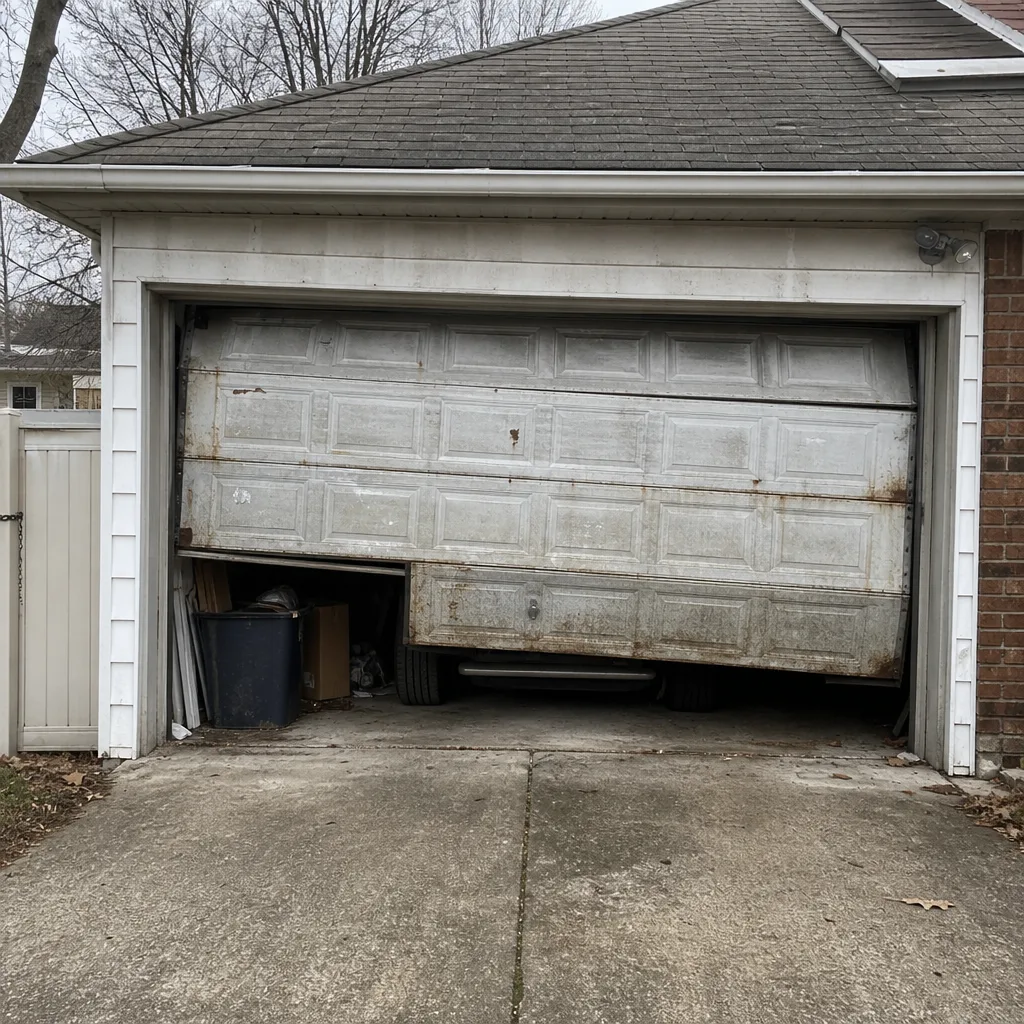 Before
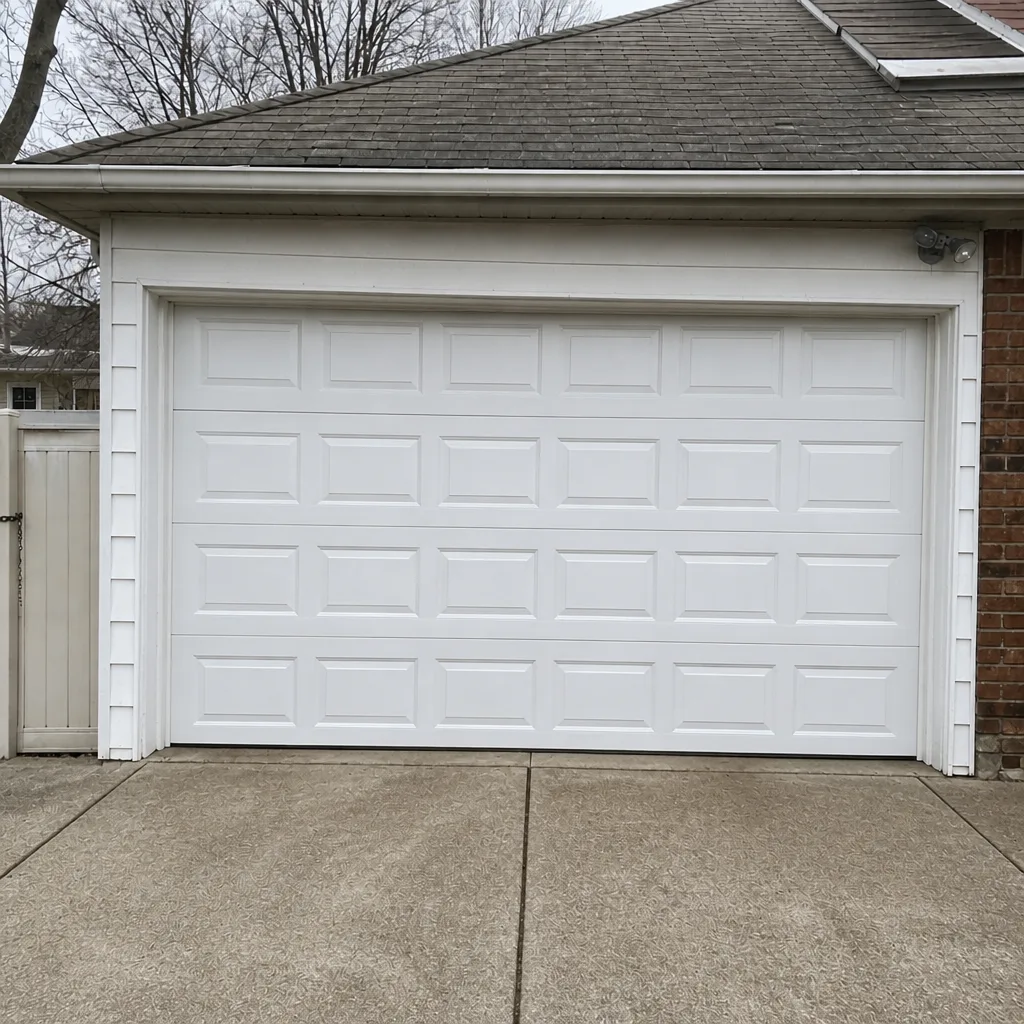 After
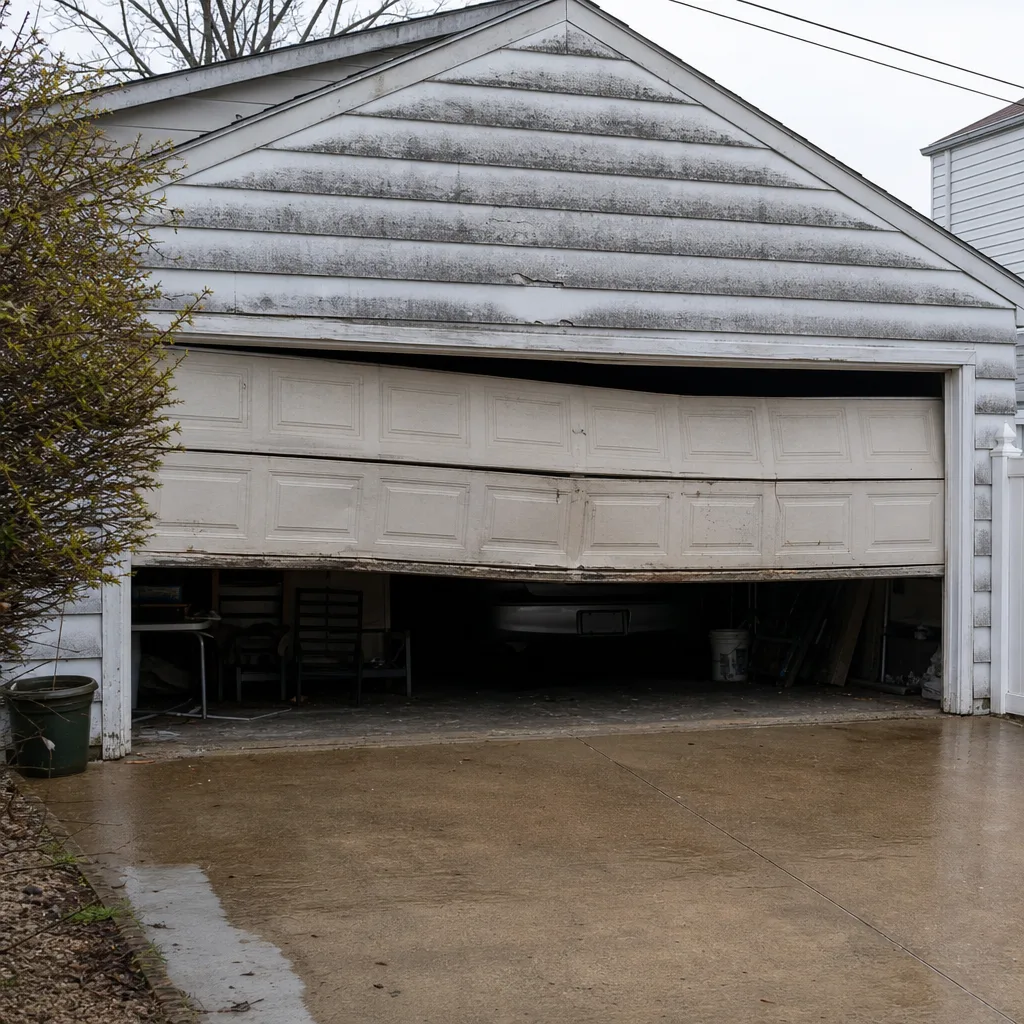 Before
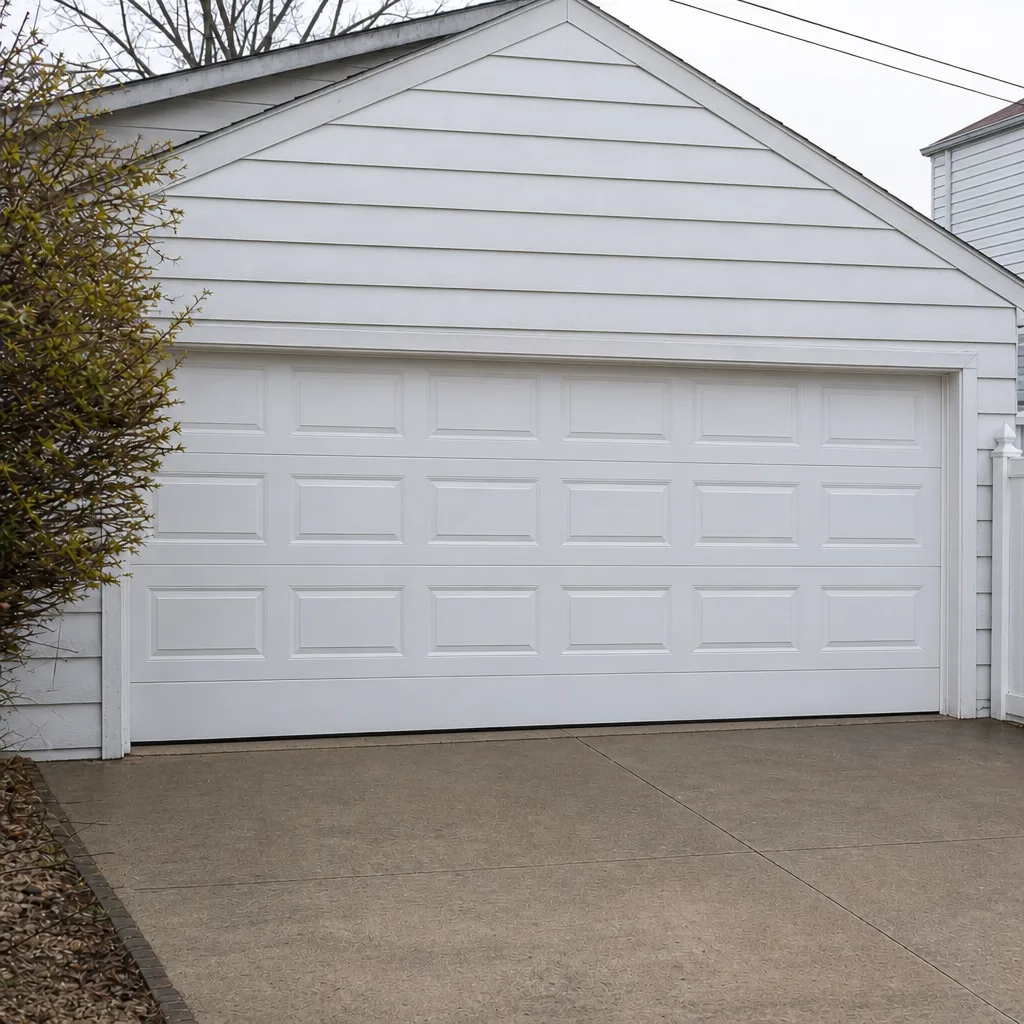 After
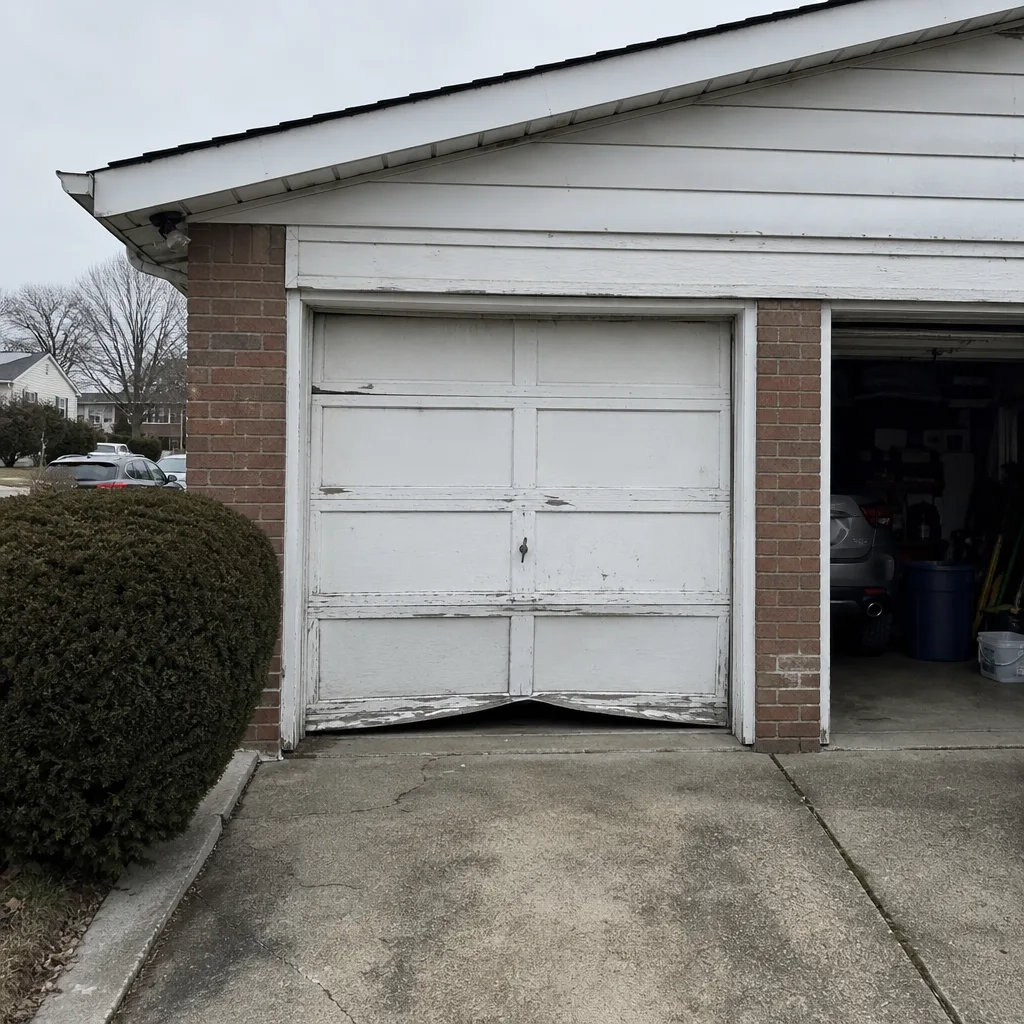 Before
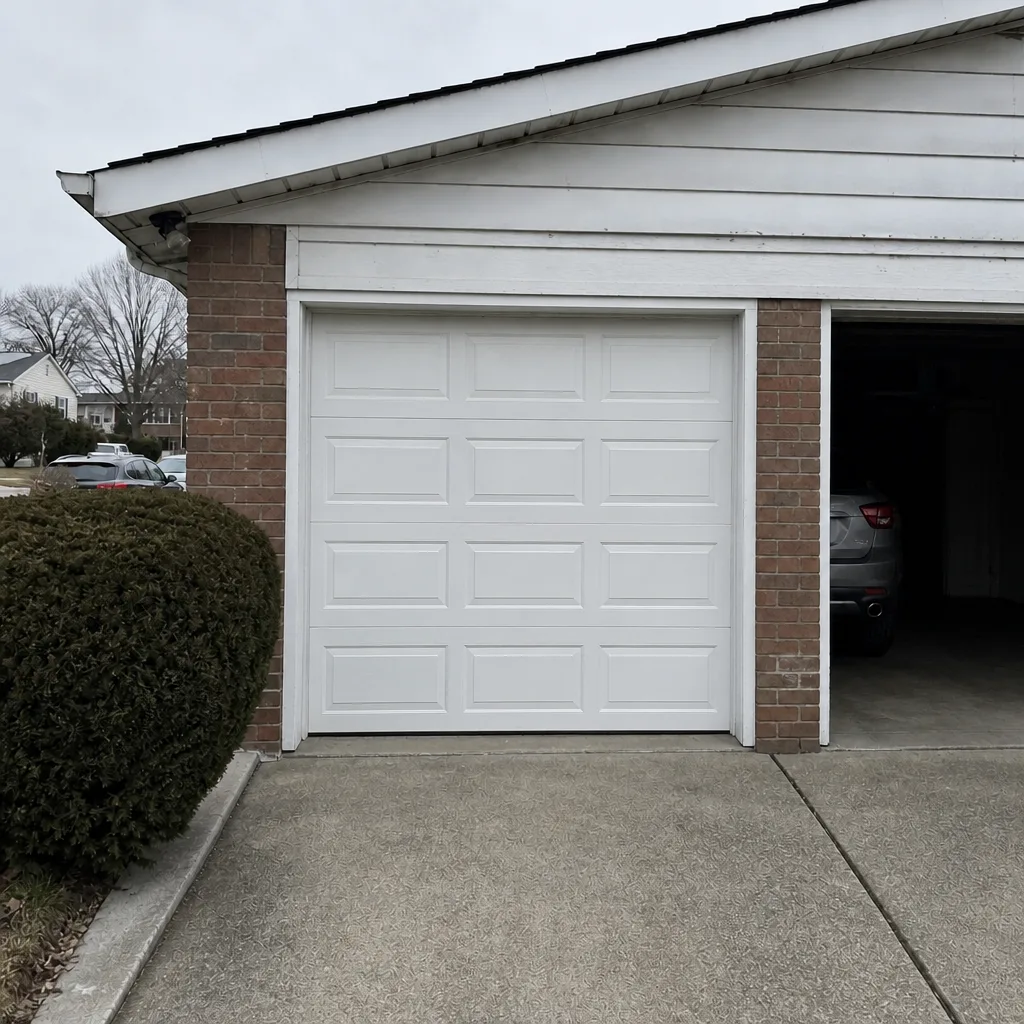 After
When to Call a Professional
Call a professional any time you hear popping from the spring, see frayed cables, notice the door reversing on its own, or the door fails to close more than once in a week. Those four signs are the ones we treat as urgent. If you’re in Hempstead and your door won’t open when you need to leave, we offer emergency response so you’re not stuck with a car trapped inside. For non-urgent warning signs, a scheduled appointment with a free estimate gets the door evaluated without pressure. Our technicians have up to 8 years of experience, and we’re factory-familiar with Raynor and Genie systems along with the six other major brands we work on. Hempstead Garage Door Repair Pros offers free estimates in Hempstead – call (844) 443-3818. We’ll quote the price before any work starts, so you’ll know the number before we touch the door.
Frequently Asked Questions
The most common warning signs in Hempstead are rust streaking on the torsion spring, a bottom seal that’s pulling away from the door, opener delay, and popping sounds during the cycle. Humid summers accelerate spring corrosion and seal shrinkage here, so the visual signs show up earlier than in drier climates. If you see rust or a visible gap at the bottom of the door, those two together warrant a professional inspection. Call (844) 443-3818 for a free estimate.
Spring repair in Hempstead typically runs $180 to $340 for a single spring, and a matched pair is usually replaced together at roughly twice that. The written estimate you receive sets the final price. We quote before any work starts, so there’s no invoice surprise when the job is done. Call (844) 443-3818 for an exact quote – estimates are free.
Yes, we offer emergency garage door service for stuck doors, broken springs, and dead openers, and same-day service is often available. If your car is trapped inside or the garage is left open to the street, call right away and we’ll get you scheduled. Call (844) 443-3818.
The price is quoted and agreed before any work starts, and we don’t change it mid-job. What we find during the estimate is what goes in the written quote. If you want additional work done beyond the original scope, we’ll quote that separately before touching it. Call (844) 443-3818 for a free estimate.
The local professional we connect you with is licensed and insured as their state requires. Our technicians have up to 8 years of experience and are trained specifically on garage doors, not general handyman work. We work on LiftMaster, Chamberlain, Genie, Clopay, Amarr, Wayne Dalton, Craftsman, and Raynor systems. Call (844) 443-3818 for a free estimate.
DIY-safe signs are cosmetic or low-risk: loose bolts, dry hinges, dirty photo-eyes, and a dead remote battery. Call-a-pro signs are all spring, cable, track, and opener electrical issues. Springs under tension can cause serious injury, so never adjust one yourself. Call (844) 443-3818 and we’ll tell you which category your warning sign falls into.
The Bottom Line
Garage door failures rarely happen without warning. The door tells you what’s failing weeks before it stops, through sounds, visual cues, and opener behavior. In Hempstead, add humidity to that list: rust on the spring, shrinkage at the bottom seal, and panel swelling are the local markers that don’t show up in drier regions. Write down what you see, lubricate twice a year, and treat spring, cable, or track issues as professional work. If you’re seeing more than one sign, that’s your cue to call. At Hempstead Garage Door Repair Pros, we diagnose by brand and by symptom, and we quote before we start.
For a free estimate in Hempstead, call (844) 443-3818. We’ll walk you through what each sign means before recommending anything.
Written by the team at Hempstead Garage Door Repair Pros.